Trust But Verify: Why You Should Never Refer Clients to Facebook Group Strangers
Have you ever sought referrals in Facebook networking groups?
You post your ask. Ten strangers reply offering their services. Generic pitches. Profile photos. Maybe a website link.
You’ve never heard their voices. Never seen their faces beyond a static photo. Never watched them handle a real business challenge.
And you’re supposed to refer your best client to one of them?
Facebook groups are scientifically proven low-trust environments. Research shows text-only communication builds less than 50% of face-to-face trust. Yet strangers expect you to bet your reputation on them based on a profile photo and three comments.
Here’s how to escape Facebook networking chaos and build real, verified trust without getting burned.
The Facebook Networking Paradox
You joined Facebook business groups to build your network. Makes sense, right? Free access to thousands of local business owners.
But here’s what actually happens:
Someone posts: “Looking for a good accountant for my clients. Referrals?”
Twelve strangers reply:
- “I’m a CPA! DM me!”
- “Check out my page, I’d love to connect!”
- “I’ve been doing taxes for 10 years!”
- Generic pitch after generic pitch after generic pitch.
And you’re supposed to choose one?
You scroll through their profiles. Static photos. Company logos. Maybe a few posts. You’ve never heard their voice. Never watched them think through a problem. Never seen how they communicate under pressure.
Facebook groups create familiarity with faces and names. But they don’t create trust.
Research from the Royal Society confirms what you already feel: text-only communication builds less than 50% of face-to-face trust. That’s the same as flipping a coin when you refer a client.
“Facebook groups promise networking but deliver spam. Everyone’s pitching, nobody’s actually connecting.”
What Facebook Trust Actually Gives You
Let’s be clear: Facebook networking isn’t worthless. It does provide some value:
1. Visibility You know these people exist. You’ve seen their business names.
2. Basic Information You know what industry they’re in, what services they claim to offer.
3. Surface-Level Professionalism Their profile looks decent. Their company page seems legitimate.
But here’s what Facebook trust DOESN’T give you:
- How they handle client complaints
- Whether they respond to messages promptly
- If they deliver what they promise
- How they perform under deadline pressure
- Whether they’ll make you look good or bad when you refer them
You’re betting your reputation on someone’s profile photo and a three-sentence pitch.
“Less than 50% trust is the same as gambling. You wouldn’t flip a coin with your best client’s satisfaction. Why do it with referrals?”
Why Video Changes Everything (But Still Needs Verification)
1. Lowered Barriers You’re way more likely to reach out, ask questions, start conversations. The awkwardness is gone.
2. Positive Feelings You already like them. You’re willing to give them a shot. This speeds up relationship building.
3. Shared Context You know their business, their style, how they think. No need for long explanations you’re already on the same page.
4. Willingness to Collaborate You can imagine working with them. The trust foundation is there you just need to verify it’s solid.
This is huge. These are the exact barriers that make Facebook networking so dangerous.
“Video creates 70-80% trust vs Facebook’s less than 50%. That’s the difference between gambling and knowing.”
But here’s what video trust doesn’t give you yet:
- Proven reliability under pressure
- Tested professional skills
- Evidence they follow through
- Track record with real clients
You need both: The familiarity from video (70-80% trust) AND the proof from action (verification).
This is why you can’t just refer clients to Facebook strangers. And it’s why video trust still needs testing.
The 5-Step Trust Verification Ladder
Don’t jump straight from “I like their videos” to “here’s my biggest client.”
Test trust step by step each rung builds evidence before you risk more.
“Start small. Build proof. Then bet big.”
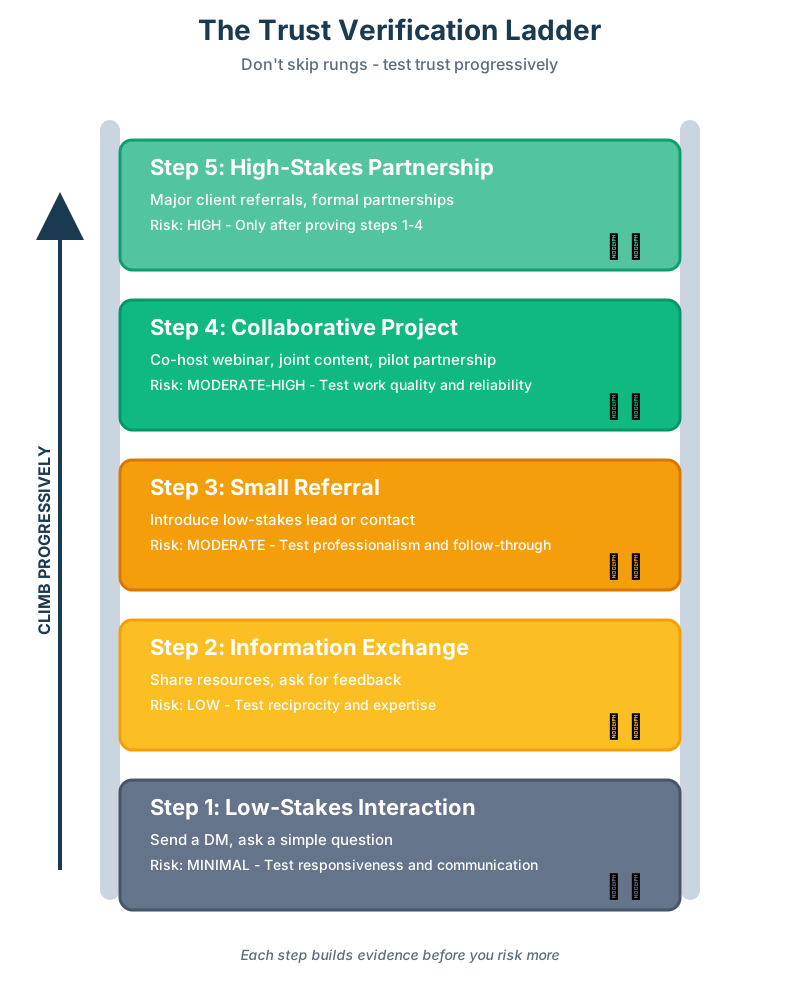
Step 1: Low-Stakes Interaction
What to do: Send a DM asking a simple question related to their expertise.
What you’re testing:
- Do they respond promptly?
- Is their answer helpful?
- Do they communicate clearly?
Risk level: Minimal (just your time)
Example: “Hey Mark, saw your video about tax planning for contractors. Quick question does the home office deduction still make sense for service businesses in 2025?”
Green flag: They respond within 24-48 hours with a thoughtful answer.
Red flag: No response, or a generic unhelpful reply.
“How someone answers a simple question tells you how they’ll handle a referral.”
Step 2: Information Exchange
What to do: Share something useful (article, resource, introduction) and see if they reciprocate.
What you’re testing:
- Do they acknowledge your help?
- Do they offer value in return?
- Do they show genuine interest vs just taking?
Risk level: Low (sharing knowledge)
Example: “Hey Sarah, thought of you when I read this article about video marketing for local businesses. Might spark some ideas for your clients.”
Green flag: They thank you, engage with the content, and later share something useful with you.
Red flag: They take but never give back.
Step 3: Small Referral or Introduction
What to do: Refer a low-stakes lead or introduce them to someone in your network.
What you’re testing:
- How do they handle the opportunity?
- Are they professional with the person you referred?
- Do they report back on the outcome?
Risk level: Moderate (your reputation with the referred party)
Example: “Tom, my neighbor is looking for an accountant for his new landscaping business. Small client, but he’s solid. Want me to intro you?”
Green flag: They handle it professionally, keep you updated, thank you regardless of outcome.
Red flag: They drop the ball, handle it poorly, or ghost you after.
“Your first referral is a test. How they handle it tells you everything.”
Step 4: Collaborative Project
What to do: Work together on something small co-host a webinar, create joint content, run a pilot partnership.
What you’re testing:
- Do they show up on time?
- Is their work quality high?
- Do they handle disagreements professionally?
- Are they reliable under deadline?
Risk level: Moderate-High (your time + reputation)
Example: “Jamie, want to co-host a LinkedIn Live on ‘Marketing + Web Development: Better Together’? We could each bring our expertise and cross-promote.”
Green flag: They’re organized, deliver quality work, communicate well, share credit.
Red flag: They’re flaky, cut corners, or try to take all the credit.
“Small collaborations reveal how someone handles deadlines, disagreements, and shared success.”
Step 5: High-Stakes Partnership
What to do: Major client referral, formal business partnership, revenue-sharing arrangement.
What you’re testing:
- Everything. Full professional competence under real business pressure.
Risk level: High (significant business impact)
Example: “Sarah, I have a $25K client who needs comprehensive rebranding. This is a long-term relationship for me if you’re interested, I’d love to bring you in.”
You only reach this step if they’ve proven themselves at every level before.
Key principle: Don’t skip rungs. Each step builds the evidence you need before risking more.
“Trust isn’t built in one big leap. It’s built in five small steps.”
Red Flags vs Green Flags
As you climb the trust ladder, watch for these signals:
Green Flags (Trust is Real)
Consistent Video Posting They show up every week, on schedule. Reliability in small things predicts reliability in big things.
Authentic Sharing They share wins AND challenges. Not just highlight reels real business.
Responsive to Engagement They reply to comments and messages. Reciprocity matters.
Group Participation They mention other members, celebrate others’ wins, engage beyond just their own content.
Delivers on Small Commitments When they say “I’ll send you that resource,” they actually do it.
“Watch how someone shows up in the small things. That’s how they’ll show up in the big things.”
🚩 Red Flags (Proceed with Caution)
Inconsistent Posting They disappear for weeks, then post three videos in a day. Unreliability is a pattern.
Overly Polished Every video is a pitch. No vulnerability, no authenticity, just marketing.
Never Engages Back They broadcast but never respond. One-way relationships don’t work.
Never Mentions Others They treat the group as an audience, not a community. Transactional mindset.
Overpromises, Under-delivers Their videos promise the moon, but small tests reveal they don’t follow through.
Trust your gut. If something feels off, test it before committing.
How Rhythm of Business Makes Verification Easy
The platform supports the trust ladder:
Messaging Test responsiveness with simple questions. See how they communicate one-on-one.
Weekly Videos Track record over time. Consistency (or lack of it) becomes visible.
Group Visibility See how they interact with others. Social proof from fellow members.
Ask Videos Low-risk collaboration. “I need a web developer for a small project” lets you test before major referrals.
Optional Meetups When you’re ready, meet in person or jump on a call.
You can climb at your own pace. Build evidence before high-stakes commitments.
Dynamic Matching: Verification Gets Easier Over Time
Here’s what most networking platforms miss: your group evolves to match how you network.
If you respond to messages in 24-48 hours, the members you’re matched with likely do the same. If you show up every week, you’ll be grouped with other consistent members. If you give referrals generously, you’ll end up with fellow givers.
Why this matters for verification:
When you test someone’s responsiveness (Step 1), you’re not testing a random stranger you’re testing someone matched to you based on how they actually behave. The person who responds quickly to your message was already selected because they show similar engagement.
Verification becomes easier when everyone in your group networks the way you do. You’re not wasting time on people who ghost messages or disappear for weeks. The matching does the first layer of filtering.
Groups evolve over time. As members interact, the platform refines who gets matched with who. High-responders cluster together. Consistent weekly posters find each other. Generous referral-givers end up collaborating.
**You still climb the ladder **but you’re climbing with people who’ve already proven they operate at your pace.
“Smart matching means you verify faster. Everyone in your group already networks like you do.”
What Happens If You Skip Verification?
Let’s be honest: Facebook networking is gambling with your reputation.
Someone posts “Looking for an accountant.” Twelve strangers reply. You pick one based on their profile photo and a three-sentence pitch.
The cost of that gamble:
- You refer a major client, they drop the ball, your reputation takes the hit
- You enter a partnership, they flake out, you’re stuck covering their work
- You invest time in a collaboration, they ghost you halfway through
- Your client tells three other people about the bad referral you made
One bad referral can damage relationships you spent years building.
Facebook groups make this worse because there’s no accountability. The person who burned you just moves to the next group. Posts the same generic pitch. Finds another victim.
By verifying step by step, you protect yourself AND the other person. If they’re not ready for high-stakes work, better to discover that during a small test than a major client referral.
“Verify early, verify small. Protect your reputation before you bet it on Facebook strangers.”
The Bottom Line
Facebook networking gives you something dangerous: the illusion of connection without actual trust.
Someone posts three times, replies to your comment, and suddenly they’re asking for your best client referrals. That’s not networking. That’s gambling.
Research proves it: Text-only communication builds less than 50% of face-to-face trust. Video networking? 70-80%.
But even 70-80% trust needs verification.
Use the trust ladder:
- Test with a simple question
- Exchange information and see if they give back
- Try a small referral and watch how they handle it
- Collaborate on a small project before big commitments
- Only then move to high-stakes partnerships
Facebook groups skip all five steps. They expect you to jump from “I saw your profile” to “here’s my best client.”
Rhythm of Business gives you both: The familiarity from weekly videos (70-80% trust) AND the structure to test trust step by step message to ask to referral to partnership.
You don’t have to choose between speed and safety. You can build trust fast AND verify it’s real.
“Stop gambling your reputation on Facebook strangers. Build real trust through video, then verify it step by step.”
Your network is your most valuable asset. Protect it by escaping Facebook chaos and verifying trust before betting your reputation.
See How It Works
Discover how Rhythm of Business makes trust-building AND verification simple.
Join a Trusted Group
Industry-exclusive groups.
Build trust, verify it, protect your reputation.
$69 CAD invoiced monthly
no charge until matched