The Mere Exposure Effect: Your Secret Weapon for Business Referrals
What if you could build trust without saying a single impressive thing?
Two plumbers. Same qualifications. Same pricing. One posts a weekly 60-second video generic updates, nothing flashy. The other shows up to quarterly chamber mixers with an amazing elevator pitch polished, impressive, professional.
Which one gets the referral when someone needs a plumber?
The weekly poster gets the referral. Consistently.
Not because their content was better. Because their face was familiar. And in business networking, familiarity doesn’t just breed comfort it breeds referrals.
This is the mere exposure effect. And once you understand it, you’ll never stress about posting “impressive” content again.
What Is the Mere Exposure Effect?
In the 1960s, social psychologist Robert Zajonc discovered something surprising: repeated exposure to something makes you like it more even if you’re not consciously aware you’ve seen it.
In his classic 1968 study, he showed participants unfamiliar Chinese characters. Some characters appeared once. Others appeared up to 25 times. Then he asked participants to rate how much they liked each character and guess its meaning.
Result? Participants consistently rated the frequently shown characters as having more positive meanings without being able to explain why.
They had no idea they’d seen those characters more often. They just “liked” them better. Their brains had registered familiarity as positive, trustworthy, and safe.
Why This Matters for Business Networking
You don’t need to be remarkable every time you post a video. You just need to be there.
Ten mediocre weekly videos will generate more referrals than one amazing quarterly chamber event. Because when someone needs what you offer, their brain retrieves the familiar name not necessarily the most impressive one.
Consistency beats brilliance every time.

Why Familiarity = Trust
Our brains evolved in environments where familiar = safe and unfamiliar = potential threat.
When you see the same face repeatedly, your brain learns: “This person is safe. I’ve encountered them before and nothing bad happened. I can trust them.”
This happens on a neural level. Repeated exposure reduces cognitive load. Your brain doesn’t have to work hard to process familiar information it’s comfortable, easy, automatic.
Here’s the business implication: Familiarity creates comfort, and comfort gets mistaken for credibility.
When someone asks “Do you know a good accountant?” their brain doesn’t search for “most qualified accountant.” It searches for “familiar accountant face.” And it retrieves whoever they’ve seen most recently and most frequently.
The Familiar Face Wins
Scenario: Emma needs a marketing consultant. Two options come to mind:
- Alex - Met at a chamber event six months ago. Amazing elevator pitch, 10x ROI case studies, super impressive.
- Sarah - Posts a video every week. Generic updates. Nothing spectacular. Just consistent presence.
Who does Emma refer?
Sarah. Because Alex’s name doesn’t even come up in Emma’s mental search. Her brain filtered “familiar marketing consultant faces” and Sarah was the only hit.

Sarah Martinez
Marketing Consultant
Martinez Marketing Solutions
Vancouver, BC
Fictional character for illustrative purposes
“I don’t overthink my videos,” Sarah says. “Week 1, I talked about a client project. Week 5, I shared a quick tip about email subject lines. Week 10, I mentioned a marketing trend I’d noticed. Nothing brilliant, just consistent. By Week 12, three members had DM’d me asking about marketing help. They didn’t remember my specific videos, they just felt like they ‘knew’ me.”
Familiarity = automatic inclusion in the consideration set. Absence = invisibility.
The Consistency Advantage
Let’s do the math.
Quarterly networking events (chamber mixers, local meetups): 4 touchpoints per year.
Weekly video networking: 52 touchpoints per year.
You’re getting 13x more exposure than competitors who only show up quarterly. And every exposure is building familiarity, which is building referral-readiness.
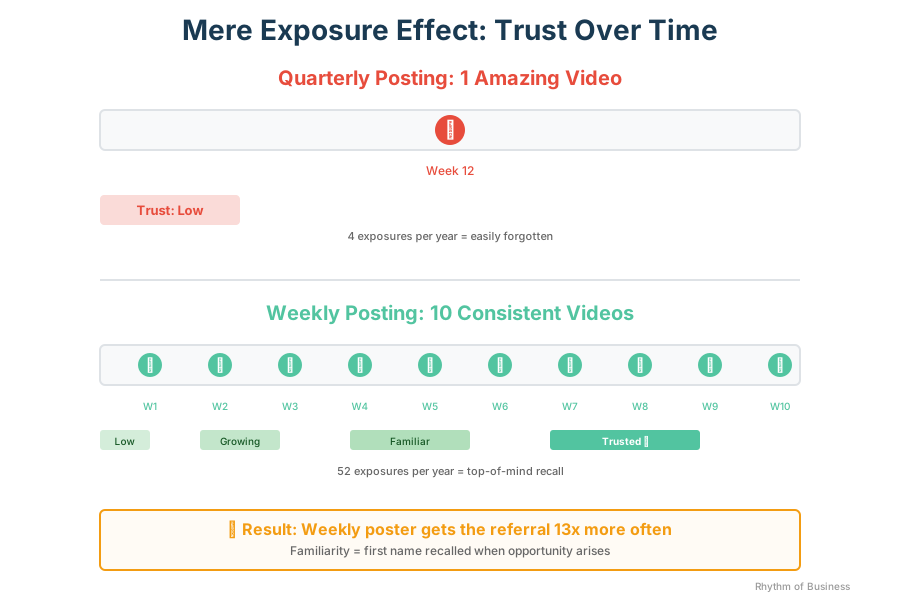
The Compounding Effect
Week 1: “Who’s this person? Don’t know them yet.”
Week 5: “Oh, it’s Jamie again. Starting to recognize their face.”
Week 10: “Jamie! Yeah, I feel like I know them. They’re part of the group.”
Week 20: “Jamie’s a trusted colleague. When someone needs what Jamie does, I’m referring them immediately.”
This doesn’t happen with sporadic posting. You need consistent, repeated exposure to trigger the mere exposure effect.
Why Influencers Win
Ever notice how influencers with mediocre content but consistent posting schedules build massive loyal audiences?
That’s the mere exposure effect.
Their followers aren’t necessarily impressed by every post. But they’re comfortable with the creator’s presence. They’ve seen them so many times that the creator feels like a friend. And when a product recommendation comes from a “friend,” it feels trustworthy.
B2B networking works the same way. Your weekly videos aren’t just updates they’re trust deposits. Each one makes you slightly more familiar, slightly more comfortable, slightly more referable.
How to Leverage the Mere Exposure Effect
Good news: You don’t need to overthink this.
1. Show Up Consistently
Pick a day. Block 10 minutes. Record your video. Post it. Repeat every week.
That’s it. You don’t need brilliant insights or groundbreaking case studies. You just need to be present.
Simple formula:
- “This week I [what you did]”
- “I’m looking for [what you need]”
- “If you know anyone, I’d appreciate the intro.”
Done. Posted. Exposure created.
2. Track Your Streak
Gamify consistency. Celebrate milestones:
- 10 weeks (you’re building momentum)
- 20 weeks (mere exposure effect is kicking in)
- 52 weeks (you’ve lapped competitors 13x over)
Your streak is your competitive advantage. Protect it.
3. Let the Community Hold You Accountable
When your networking group sees who posted this week and who didn’t, social pressure kicks in. You don’t want to be the one who skipped.
Use that. It’s healthy accountability that keeps you consistent.
4. Trust the Process
The mere exposure effect is cumulative. Week 1 won’t generate referrals. Week 5 might not either.
But somewhere between Week 10 and Week 20, you’ll notice: people are thinking of you first. Your name comes up more. Referrals start flowing.
That’s the mere exposure effect working. And once it starts, it compounds.
The Bottom Line
Zajonc’s research proved it: Repetition creates preference.
You don’t have to be the most impressive person in the room. You just have to be the most familiar person in the room.
Your competitors are stressing about having something brilliant to say. They’re waiting until they have a big win to share. They’re posting once a quarter and wondering why referrals aren’t coming.
Meanwhile, you’re showing up every single week. Saying simple things. Building familiarity. Becoming the automatic first choice when referral opportunities arise.
Consistency is your secret weapon. The mere exposure effect guarantees it works.
Commit to 12 weeks of weekly videos. Watch what happens. You’ll see the psychology in action and you’ll see the referrals start flowing.
Learn More About Us
Discover how we built Rhythm of Business to solve the networking time waste problem.
Find Your Group
One spot per industry, per group. First come, first served.
$69 CAD invoiced monthly
no charge until matched