Should You Join an Industry-Specific or Cross-Industry Networking Group?
You’re standing at a crossroads: join the industry-specific group where everyone speaks your language, or go cross-industry where you’re the only one who does what you do?
The industry-specific group feels safer. Everyone understands your challenges. Same problems, same solutions, same vocabulary.
But here’s what most business owners miss:
Your clients don’t need two of you. They need one of you plus nine other specialists.
And that changes everything.
Sarah Martinez faced this exact choice when picking a networking group for her marketing consultancy.
Cross-Industry Networking: The Referral Advantage

Sarah Martinez
Marketing Consultant
Martinez Marketing Solutions
Vancouver, BC
Fictional character for illustrative purposes
Sarah joined a cross-industry Rhythm of Business group instead of the marketing-only meetup.
As an introvert who gets talked over in live networking meetings, she’d struggled with traditional groups where everyone competed for airtime. But in this cross-industry group? No competition. Just complementary businesses.
Her group included:
- Tom Marino (accountant)
- Miguel Rodriguez (general contractor)
- Emma Thompson (real estate agent)
- Linda Morales (mortgage broker)
- Plus 20 other completely different businesses
Here’s what happened in her first three months:
Week 4: Sarah’s client mentioned selling his business. She immediately thought of Tom, accountants handle business sale tax implications. She sent a direct message connecting them. The client worked with Tom. Tom sent Sarah a thank-you note.
Week 7: Tom’s client bought commercial property. He referred them to Emma for the transaction. Emma closed the deal.
Week 9: Emma’s buyer needed office renovations. She referred Miguel. Miguel won the $85,000 project.
Week 11: Miguel’s renovation client needed better online presence. He referred Sarah. Sarah landed a $24,000 annual retainer.
That’s how cross-industry groups work. Everyone refers to everyone because no one competes with anyone.
Your ideal networking group has 1 of YOU and 20+ different industries. Not 20 versions of you.
Why Cross-Industry Referrals Actually Work
Your clients have diverse needs.
When Sarah’s client sells a business, they need:
- An accountant (tax planning)
- A lawyer (purchase agreement)
- A real estate agent (if property is involved)
- A banker (escrow accounts)
- An insurance broker (liability coverage)
Not 5 marketing consultants.
The business-to-business referral ecosystem works because services stack together. Your client rarely needs two of you. They almost always need one of you plus nine other specialists.
In Sarah’s cross-industry group:
- The accountant refers tax questions to himself
- But refers legal questions to the lawyer
- And property transactions to the realtor
- And construction projects to the contractor
- And marketing needs to Sarah
Everyone becomes the trusted advisor network. The group refers complete solutions, not piecemeal services.
When Industry-Specific Groups Still Matter
Industry groups aren’t useless. They just serve a different purpose.
Don’t join industry groups for referrals. Join them for:
1. Peer Learning
Last month Sarah attended a digital marketing association meeting. They discussed:
- New platform algorithm changes
- Pricing strategies for different client sizes
- How to handle scope creep
That’s valuable. But no one referred clients to her. Why would they? Everyone in that room competes for the same clients.
2. Supplier Connections

Miguel Rodriguez
General Contractor
Heritage Home Builders
Surrey, BC
Fictional character for illustrative purposes
Miguel joined a construction trade association. He benefits from:
- Bulk purchasing discounts on materials
- Vendor relationship introductions
- Subcontractor recommendations
That’s helpful. But again, no referrals. Every contractor in that association competes for the same projects.
3. Industry Advocacy

Tom Marino
Accountant (CPA)
Marino & Associates Accounting
Coquitlam, BC
Fictional character for illustrative purposes
Tom participates in an accounting professional organization. They focus on:
- Lobbying for favorable tax policy
- Setting industry standards
- Continuing education requirements
That’s important for his profession. But it doesn’t generate client referrals.
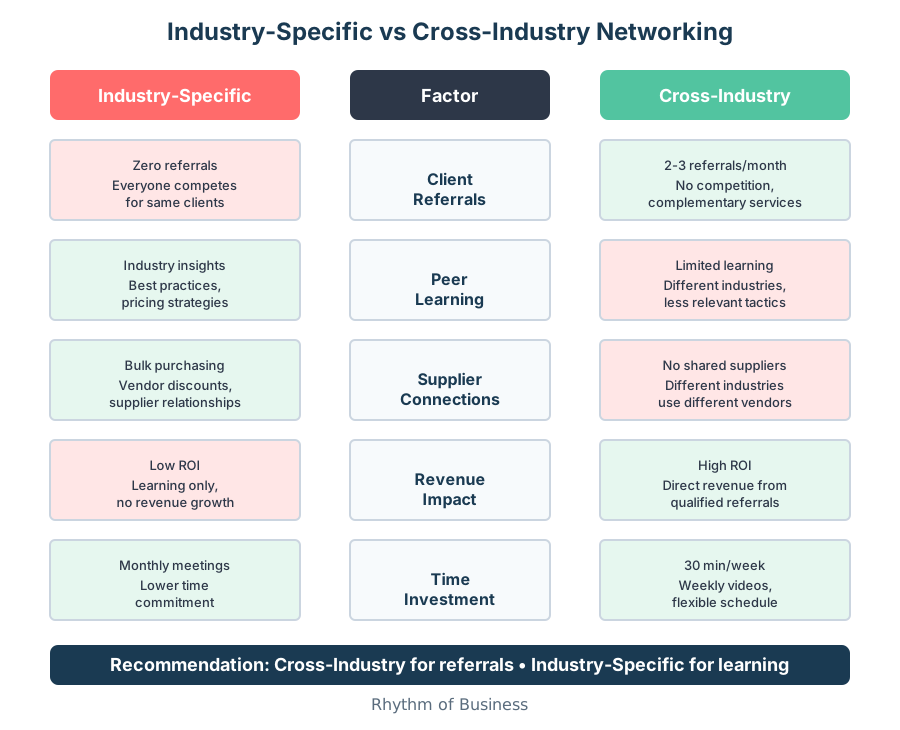
Industry-specific groups are for learning, advocacy, and supplier relationships. Cross-industry groups are for referrals.
They serve different purposes. Do both if time allows, but prioritize the cross-industry group for revenue impact.
The Best Networking Strategy for Business Growth

Emma Thompson
Real Estate Agent
Thompson Realty Group
Burnaby, BC
Fictional character for illustrative purposes

Linda Morales
Mortgage Broker
Morales Home Loans
Richmond, BC
Fictional character for illustrative purposes
Sarah’s current approach:
- Primary group: Rhythm of Business cross-industry group (weekly videos, diverse referrals)
- Secondary group: Marketing association (monthly meetings, peer learning)
The cross-industry group generates referrals. The industry-specific group sharpens her skills.
Here’s her referral flow over 6 months in the cross-industry group:
Month 1: Built trust, no referrals yet
Month 2: First referral to Tom (client needed tax help)
Month 3: Tom referred back (his client needed marketing)
Month 4: Referred Emma (client buying office space)
Month 5: Emma referred back (buyer needed brand redesign)
Month 6: Steady flow, gives 2-3 referrals monthly, receives 2-3 referrals monthly
Emma and Linda alone generate 20+ co-referrals in their first year. Every real estate transaction needs financing. Every mortgage approval involves property transactions. The partnership is natural because they serve the same clients in different ways.
Her marketing association? Zero referrals in 6 months. Lots of learning. No clients.
Both groups have value. But if you can only join one, choose the cross-industry group. That’s where revenue comes from.
The Referral Ecosystem in Action
Let’s see how circular referrals work in Sarah’s cross-industry group:
Miguel (contractor) completes a renovation. The client asks: “We love the space, now how do we fill it with customers?” Miguel refers Sarah for marketing strategy.
Sarah helps the client launch. They ask: “Our bookkeeping is a mess, who can help?” Sarah refers Tom for accounting cleanup.
Tom organizes their finances. They mention: “We’re thinking about buying the building instead of renting.” Tom refers Emma for commercial real estate.
Emma helps them purchase the property. They need: “Some updates before we move in.” Emma refers Miguel for renovations.
And the circle continues.
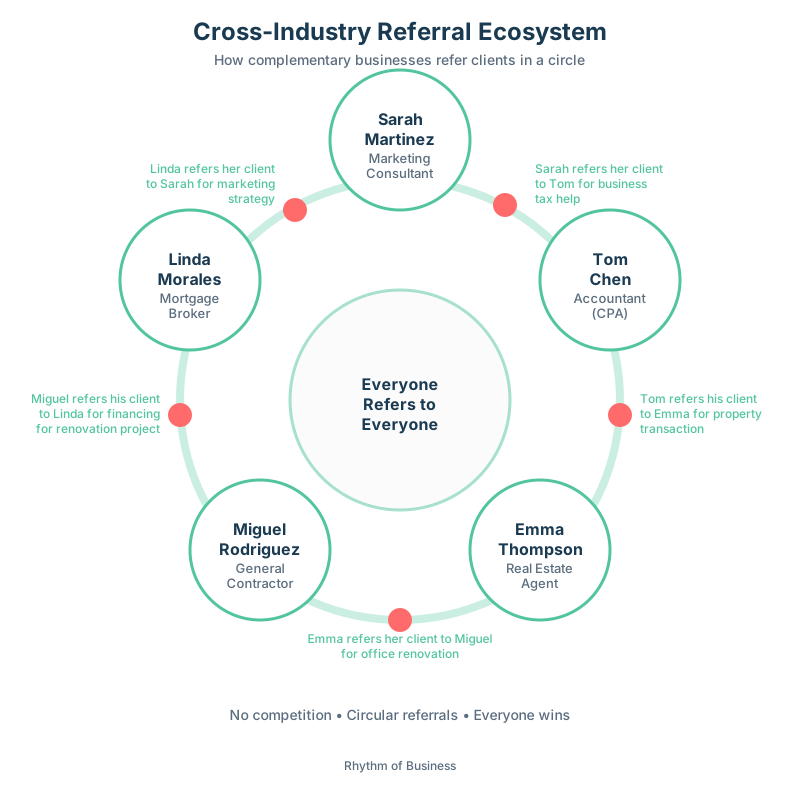
That’s the power of cross-industry networking. Everyone wins because no one competes.
In an industry-specific group, that ecosystem doesn’t exist. 20 marketing consultants competing for the same clients means zero referrals. They might share tactics, but they won’t share revenue opportunities.
Making Your Choice
If you’re deciding between industry-specific and cross-industry groups, ask yourself:
Do I need peer learning or client referrals right now?
If you’re new to your industry and need to sharpen skills, join the industry-specific group first. Learn from people 10 years ahead of you.
But if you’re established and need to grow revenue, join the cross-industry group first. That’s where referrals happen.
Most established business owners benefit more from a cross-industry group. Your skills are already strong. What you need is a steady stream of qualified referrals from trusted partners in complementary industries.
Why Rhythm of Business Groups Work
We designed Rhythm of Business specifically for cross-industry referrals.
Every group guarantees industry diversity: one professional per specialty, no internal competition. When groups rebalance quarterly, you’re still all different businesses, not competing versions of the same business.
Sarah’s group originally had 12 members. After two rebalancings, it grew to 28 members. Still all different industries. Still no internal competition.
More industries means more referral pathways. The accountant can now refer to the IT consultant (new member). The real estate agent can refer to the commercial inspector (another new member). The ecosystem expands without creating competition.
That’s the cross-industry advantage. Your network grows in diversity, not redundancy.
Start with the Cross-Industry Group
Most business owners pick the comfortable option. Join the industry-specific group where everyone speaks your language, understands your challenges, gets your frustrations.
But comfort doesn’t generate referrals.
Sarah almost made that choice. The marketing meetup would have been easier. Everyone would get SEO, conversion rates, landing page optimization.
Instead she joined a cross-industry Rhythm of Business group. Miguel doesn’t know what SEO means. Linda has never built a landing page. Tom thinks “conversion rate” means currency exchange.
But they send her clients. Real clients who pay real money.
That’s what matters.
Your job isn’t to network with people who do what you do. Your job is to network with people who serve the same clients in different ways.
If you can only join one group, make it cross-industry. Learn from your industry peers through online communities, conferences, and books. Get your referrals from the people who complement your services, not compete with them.
“Comfort doesn’t generate referrals. Complementary partnerships do.”
Ready to Join a Cross-Industry Group?
We built Rhythm of Business because we got tired of networking groups that promise referrals but deliver competition.
Most “general” networking groups let anyone join any group. You show up expecting cross-industry connections and find three accountants competing for the same clients. Referrals dry up. Awkwardness sets in.
We guarantee true cross-industry composition:
- One professional per specialty (no internal competition)
- 10-30 members from completely different industries
- Quarterly rebalancing maintains diversity as groups grow
- Behavioral clustering matches you with people who network like you do
More referral pathways. Zero competition. Maximum ecosystem value.
See How It Works
Discover how Rhythm of Business creates cross-industry referral ecosystems that generate revenue.
Learn MoreFind Your Group
Get matched with local business owners in complementary industries for maximum referral potential.
Get Started$69 CAD/month
no charge until matched · cancel anytime
Related Reading: