The Future of Business Networking: 5 Trends Reshaping How We Connect
In 2030, your grandkids will ask: “You drove 30 minutes for a 90-minute meeting just to network? Why?”
And you’ll explain that in 2024, that’s just how it was done. Live meetings. Fixed times. Mandatory attendance. Three hours of your week (including commute) to shake hands with 20 people for 60 seconds each.
They’ll look at you the same way you looked at your parents when they explained dial-up internet.
Business networking is undergoing the same transformation that reshaped commerce (Amazon), work (remote), and communication (text → video). The shift from live-first to async-first isn’t coming - it’s already here. Most business owners just haven’t noticed yet.
The question isn’t whether networking will change. It’s when you’ll adapt - and whether you’ll be 5 years ahead or 5 years behind.
Let me show you the 5 trends reshaping how business owners network, and why the early adopters are already building stronger networks faster.
The people in this post are illustrative composites, not real members, and the outcomes are examples rather than typical or promised results.
Trend 1: Async-First Becomes the Default
Current State (2024): Live networking is the norm. BNI, Chamber events, local meetups. If you want to network seriously, you show up in person. Async (LinkedIn, email) is supplementary.
Future State (2028-2030): Async is the default. Live is the occasional supplement.
The drivers are already visible:
Time scarcity - Business owners don’t have 3 hours weekly for meetings anymore. They need efficiency without sacrificing relationship depth.
Geographic flexibility - Work-from-anywhere culture means your ideal networking group might span 50km, not 5km downtown core.
Introvert advocacy - More business owners admitting: “I hate live networking, but I need referrals.” Platforms built for thoughtful engagement over performance will win.
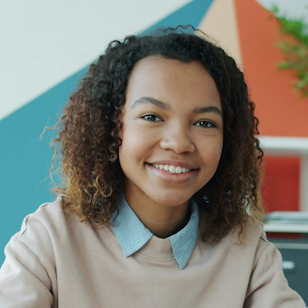
Sarah Martinez
Marketing Consultant
Martinez Marketing Solutions
Vancouver, BC
2020: Sarah spent 130 hours a year in live networking meetings (weekly BNI chapter). Generated 6 quality referrals.
2024: Sarah switched to async video networking. 39 hours a year. Generated 12 quality referrals.
Same local market. Same industry exclusivity. Same reciprocity culture. Just without the commute and fixed meeting time. She saved 91 hours and doubled her referrals. That's the async advantage.
Fictional character for illustrative purposes
Rhythm of Business position: We’re already async-first. Not because it’s trendy - because it’s more effective for trust-building while respecting time.
What this means for you: Start building async networking skills now (video communication, DM engagement, thoughtful commenting). By 2028, these won’t be optional. They’ll be table stakes.
“The future of networking isn’t about attending more meetings. It’s about building deeper relationships in less time.”
Trend 2: Video Becomes the Native Format
Current State (2024): Text profiles with occasional video. LinkedIn posts are still mostly written. Video is “nice to have” supplement.
Future State (2028-2030): Video-first platforms. Your profile is your intro video. Updates are videos. Messages include video clips.
Why? Because Gen Z and Millennials (your next decade of business owners) are TikTok-native. They consume information through video. They trust video more than text. They’ll build businesses the same way.
Why video fits:
- A short video shows your face, voice and personality in a way a text post can’t
- A 60-second video is quicker to watch than reading 500 words
- The mere exposure effect suggests that seeing the same face regularly builds familiarity, and familiarity helps trust
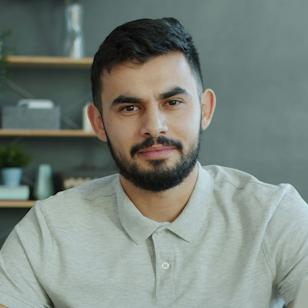
Tom Marino
Accountant (CPA)
Marino & Associates Accounting
Coquitlam, BC
Tom posted the same content in two formats: LinkedIn text post about year-end tax planning (230 views, 8 likes, 0 DMs). Video version of the same tips (890 views, 34 reactions, 7 DMs from prospective clients).
Same expertise. Same value. Video just performed better. Because people trusted his competence more when they could see his face, hear his voice, evaluate his presentation style.
By 2028, text-only networking will feel as outdated as fax machines. Video won't be optional - it'll be how business owners communicate by default.
Fictional character for illustrative purposes
Rhythm of Business position: Already video-native. Weekly video stories (not text posts) are the core communication format. We’re not waiting for the future - we’re building it.
What this means for you: Get comfortable on camera now. By 2030, “I’m not a video person” will sound like “I don’t use email” in 2010. Irrelevant.
“Text tells. Video shows. By 2030, business owners who can’t communicate effectively on video will be invisible.”
Trend 3: Local Micro-Communities Replace Mega-Platforms
Current State (2024): LinkedIn (1 billion users, low engagement). Massive open networks where you’re one post among millions.
Future State (2028-2030): Niche micro-communities (50-500 members, high engagement). Smaller groups with shared context, industry exclusivity, and local proximity.
The research points one way: anthropologist Robin Dunbar suggests we can maintain about 150 meaningful relationships, and that limit hasn’t changed. Mega-platforms spread your attention too thin. Micro-communities concentrate it where trust actually forms.
Example transformation:
2024 approach: Join “LinkedIn - Business Owners Canada” (84,000 members). Your post gets 12 views. Nobody knows your name. Zero referrals.
2030 approach (an illustration): Join a local group of a few dozen business owners nearby. Most of them watch your video. Several reply or message you. A couple refer clients within a few months. Everyone knows your name.

Emma Thompson
Real Estate Agent
Thompson Realty Group
Burnaby, BC
Emma spent 2 years posting on LinkedIn. 2,400 connections. Generic engagement. Zero referrals. She was invisible in a crowd of millions.
She joined a local networking group of about 30 members (Metro Vancouver, industry-exclusive slots). Within 12 weeks: Everyone knew her name. Her niche (first-time buyers under $900K near schools). Who to refer her to.
6 months later: members were introducing her to young families getting pre-approved, without being asked. LinkedIn still hadn't sent one. The difference? Micro-communities create *real* relationships. Mega-platforms create *theoretical* connections.
Fictional character for illustrative purposes
Why smaller wins:
- Everyone knows everyone (reputation matters, can’t hide from bad work)
- Shared context (same local market, similar challenges)
- Industry exclusivity (no competition for same clients)
- High engagement (your content doesn’t get lost in feed noise)
Rhythm of Business position: Built as local micro-communities from day one: groups start with 8 businesses from 8 industries and grow to about 30, one seat per industry. Not trying to scale to millions. Trying to create dozens of high-trust local groups.
What this means for you: Stop chasing massive follower counts. Start building deep relationships in 1-2 micro-communities where everyone actually knows your name.
Trend 4: Hybrid Models Become Standard
Current State (2024): Either/or thinking. BNI = 100% live. LinkedIn = 100% remote. No middle ground.
Future State (2028-2030): 80/20 hybrid. 80% async video (efficiency), 20% optional live (depth).
The model that’s emerging:
Weekly: Async video updates (primary communication, everyone participates)
Monthly: Optional virtual meetup (small groups, deeper conversation)
Quarterly: Optional in-person gathering (local members who want face-to-face bonding)
Annually: Conference/celebration (bigger event, optional, builds group identity)

Miguel Rodriguez
General Contractor
Heritage Home Builders
Surrey, BC
Miguel posts weekly videos (50 weeks, never misses). Builds trust through consistency. Emma (realtor) watched his videos for 6 months, referred 4 clients, all via video-only relationship.
When Emma had a client with a large commercial renovation project (high stakes, needed to confirm chemistry), Miguel suggested coffee. 45 minutes, confirmed working style, sealed the deal.
Video got them to 85% trust. One optional coffee closed the final 15%. That's hybrid: async for efficiency, live for key moments, both working together.
Fictional character for illustrative purposes
Why hybrid wins:
- Async builds trust to 80% (mere exposure, consistency, shared struggles)
- Live accelerates final 20% (chemistry confirmation, partnership depth)
- Optional live removes pressure (introverts stay, extroverts get their fix)
- Time efficient (a couple of hours a month instead of a weekly breakfast meeting)
Rhythm of Business position: Async-first. A weekly 60-second video is the core, with in-app chat and contact links so members can arrange coffee or a call between themselves when they want face-to-face.
What this means for you: Stop choosing between “all virtual” and “all live.” The future is both - mostly async, strategically live.
“By 2030, business owners will look back at mandatory weekly live meetings the same way we now look at mandatory office attendance: outdated and unnecessarily rigid.”
Trend 5: Authenticity Beats Polish (Finally)
Current State (2024): Professionally shot videos, curated feeds, polished pitches. Everyone’s “crushing it” and “scaling fast.”
Future State (2028-2030): Raw, authentic content wins. Phone-recorded videos. Honest struggles. Imperfect but relatable.
The driver: TikTok and Instagram Reels proved that “authentic” outperforms “polished” for engagement and trust. That truth is migrating to B2B networking.
Why authenticity wins in the future:
Small businesses can compete - You don’t need $5K video production budget. You need honesty and a phone camera.
Trust builds faster - Vulnerability (sharing real challenges) creates connection. Perfection creates distance.
Algorithms reward engagement - Platforms optimize for watch time and comments. Authentic content sparks conversation. Polished content gets passive scrolling.

Linda Morales
Mortgage Broker
Morales Home Loans
Richmond, BC
Linda posted polished videos for 8 weeks (scripted, edited, professional lighting). Average engagement: 35% watch rate, 3 comments, 0 DMs.
Week 9, she posted a raw phone video from her car: "This deal almost fell apart because the appraisal came in low. Here's what I did..." No script. One take. Imperfect.
Engagement: 68% watch rate, 12 comments, 4 DMs asking questions. Authenticity sparked conversation. Polish sparked passive consumption.
Fictional character for illustrative purposes
Rhythm of Business position: We’ve never required polish. Phone camera, natural light, one-take videos are the norm. Authenticity over production value.
What this means for you: Stop waiting for “perfect” video setup. Start recording honest, helpful content on your phone. By 2030, polish will be a liability (signals inauthenticity).
What 2030 Looks Like (Our Predictions)
These are our opinions, not research forecasts.
Live-Only Networking (BNI-style): A smaller niche, for those who truly prefer mandatory in-person.
Hybrid Groups (Async + Optional Live): Mainstream. The most common model by 2030.
Fully Async Groups: Growing fast. Video-native, micro-communities, local clustering.
Video Literacy: Required business skill (like email proficiency in 2010). “I’m not comfortable on video” won’t be acceptable.
Industry Exclusivity: Standard feature (platforms that allow direct competition will lose to protected-territory models).
Relationship-Focused Metrics: Platforms will measure engagement quality (video views, reactions, referrals given) rather than vanity metrics. Gut-feel networking becomes obsolete.
Ready to Network 5 Years Ahead of the Curve?
We didn’t build Rhythm of Business for 2024. We built it for 2030.
Because we think the business owners who adapt to async video networking today will have a head start over those who wait until it’s mainstream.
Here’s what we already have (that most networking platforms will add by 2028-2030):
- Async-first format (weekly videos, not mandatory meetings)
- Video-native communication (your story IS your video, not text post)
- Local micro-communities (start with 8 businesses from 8 industries, grow to about 30)
- Industry exclusivity (one seat per industry in each group)
- Space for live moments (in-app chat and contact links to arrange coffee yourselves, never required)
- Our matching algorithm (groups nearby businesses that network the same way, not random grouping)
The future of networking is already here. It’s just not evenly distributed yet.
See the Future Today
Discover how Rhythm of Business combines all 5 networking trends into one platform.
See How It WorksGet Your 5-Year Head Start
Start building a 2030-style network today.
Get Started$60 CAD/month
no charge until you're placed in a group · cancel anytime in the app with 4 weeks' notice
If you want to see what that future looks like in practice, take a quick tour of how Rhythm of Business works.
Related Reading
- The Science of Trust: Why Video Builds Relationships Faster Than Text - Understanding why video-native platforms win
- The 70/80 Rule: Why 30 Minutes Per Week Is Enough - Time efficiency of async networking
- Video vs Live Networking: When Each Makes Sense - Understanding the hybrid model