Video vs. In-Person Networking: The Surprising 70/80 Rule
Two hours every week. Plus commute. Plus prep. That’s 138 hours per year you can’t get back.
And here’s the brutal truth: most of that time isn’t building relationships it’s networking theater. Mandatory meetings. Forced small talk. Sitting through 30 elevator pitches to give yours. Recruiting new members to hit quotas. Administrative overhead that has nothing to do with actual referrals.
You didn’t start a business to spend 17 workdays per year in networking meetings.
What if you could get the same trust in 30 minutes per week? Not a compromise. Not “good enough.” The same trust that generates real referrals proven by research in a fraction of the time.
That’s the 70/80 Rule.
The Research Behind the 70/80 Rule
The Royal Society published a comprehensive trust study in 2023 (Diana et al., Philosophical Transactions of the Royal Society B) comparing how different communication formats build trust between strangers.
The findings:
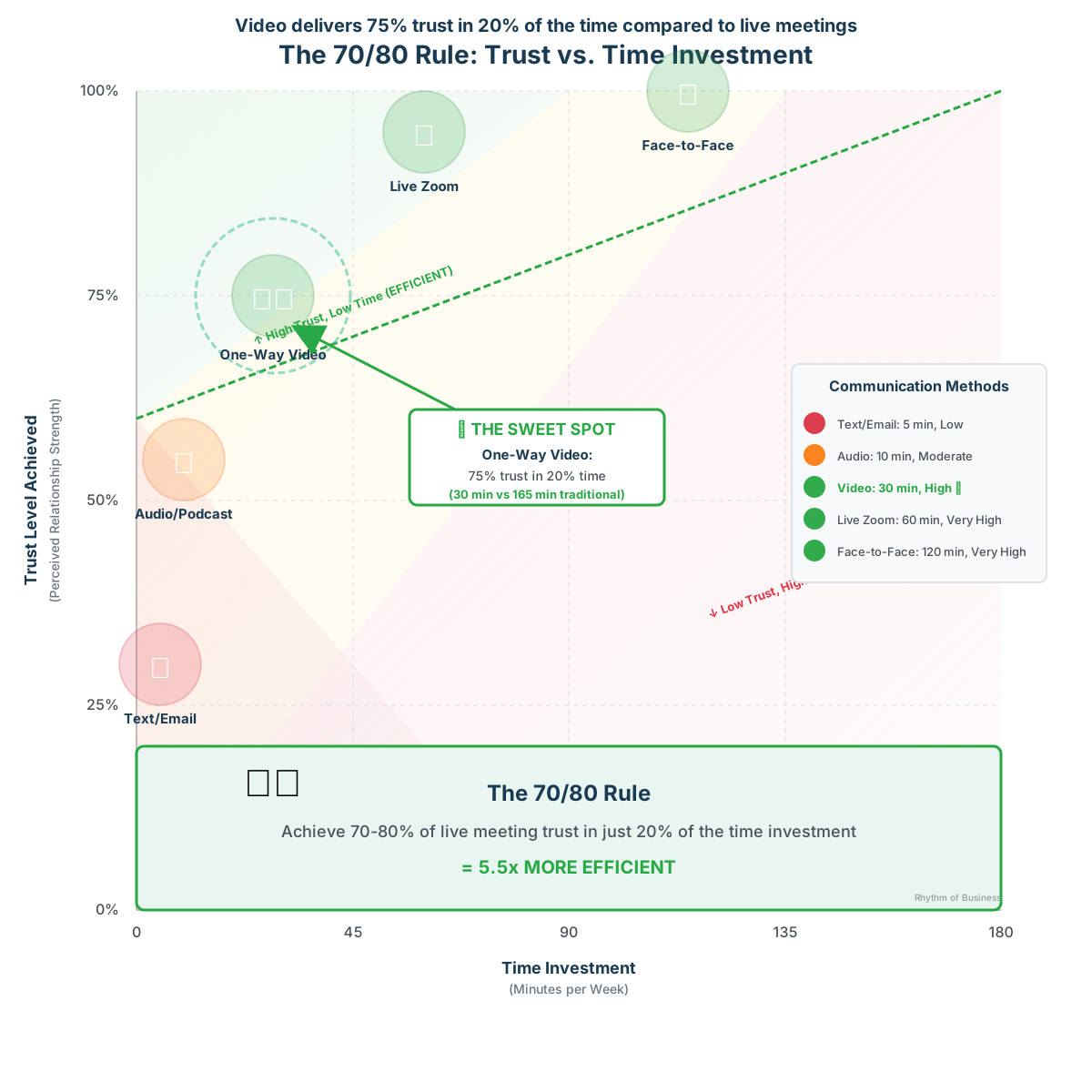
- Face-to-face meetings: 100% baseline (our reference point)
- Live video calls: ~95% trust (virtually identical to in-person)
- Pre-recorded video: Significantly lower than live, but substantially higher than text
- Text-only communication: Less than 50% (major drop-off)
Now, the study didn’t quantify exactly how much trust pre-recorded video generates. They found it was “significantly lower” than face-to-face but still maintained “substantial trust levels” - far higher than text-based communication.
Based on their findings and our observations from real networking groups, we estimate pre-recorded video achieves 70-80% of live meeting trust. That’s our working framework - the 70/80 Rule.
Why the Gap Exists
Pre-recorded video can’t match live interaction in three specific ways:
- No real-time reciprocity - You can’t ask clarifying questions immediately
- No mutual eye contact - The natural back-and-forth that happens in live conversations doesn’t occur
- Perceived as “less personal” - One-way communication feels less interactive than dialogue
These are real differences. The trust gap is measurable.
Why the Gap Doesn’t Matter
Here’s what matters for business networking: 70-80% trust is more than enough to trigger referrals and build productive business relationships.
Think about it - if someone trusts you at 75% instead of 95%, does that stop them from referring clients? Does it prevent collaboration? No.
The trust threshold for business action is much lower than you think. Someone doesn’t need to trust you “perfectly” to send you a referral - they just need to trust you enough to believe you’ll serve their contact well.
And here’s the efficiency part: You’re achieving that solid trust in 20% of the time. That’s not a trade-off - that’s a 5.5x efficiency gain.
The Time Economics
Let’s do the math on what traditional networking actually costs you.
Traditional Networking (BNI-Style Groups)
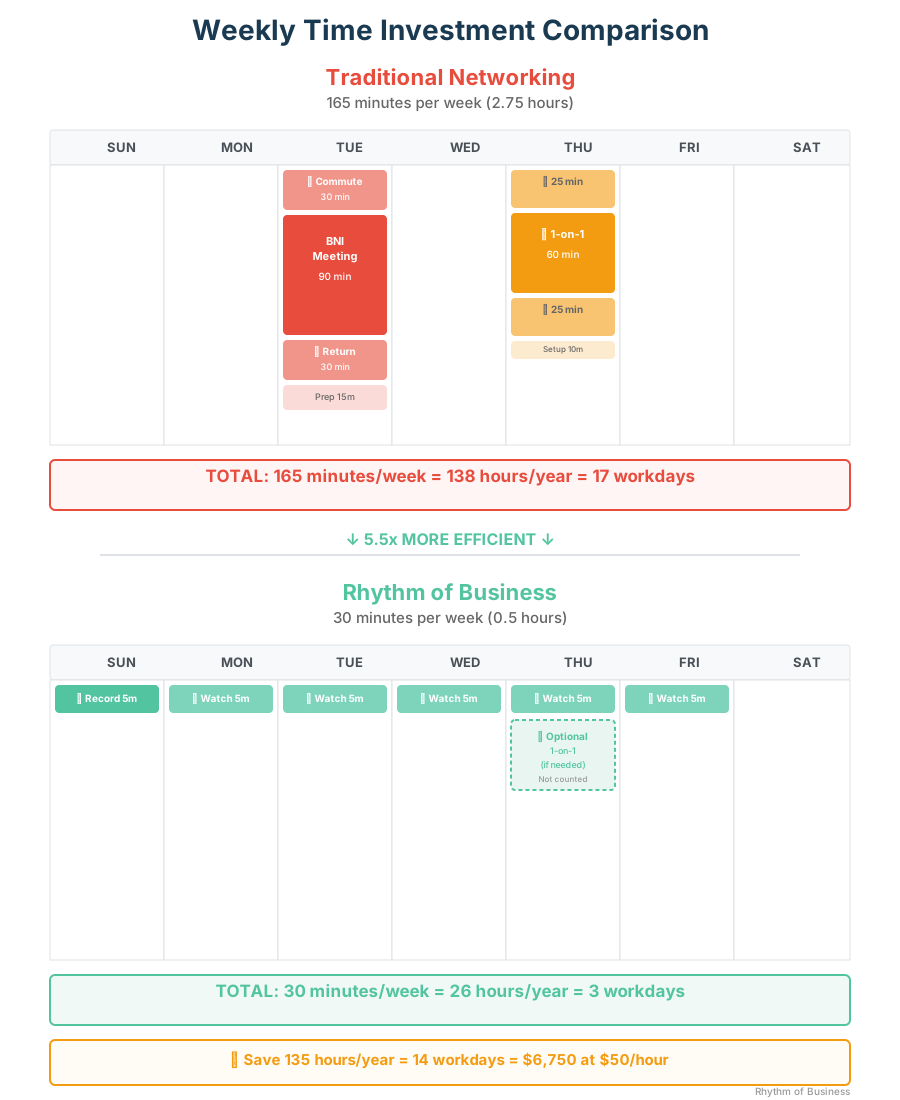
- Weekly meeting: 90 minutes
- Travel time: 30 minutes each way (60 minutes total)
- Pre-meeting prep: 15 minutes (preparing your 60-second pitch, reviewing referrals)
- Total per week: 165 minutes (2.75 hours)
- Annual investment: 138 hours
That’s 17+ full workdays every year.
Video Networking (Rhythm of Business)
- Record weekly video: 5 minutes (Sunday - record your weekly story)
- Watch 5 member videos: 25 minutes (5 minutes per day Monday-Friday)
- Total per week: 30 minutes
- Annual investment: 26 hours
That’s 3 full workdays.
The Savings
You save 135 hours per year. That’s 14 full workdays you can use for revenue-generating activities, strategic planning, or - here’s a thought - spending time with your family.
What’s 14 workdays worth to your business?
- If you bill at $100/hour, that’s $11,200 in reclaimed time
- If you bill at $200/hour, that’s $22,400
- If you bill at $500/hour, that’s $56,000
Even if video networking generated only 50% of the referrals (it doesn’t - it’s closer to 70-80%), you’d still come out ahead financially. The time savings alone justify the approach.
What You Gain with Video Networking
The efficiency advantage is obvious. But there are other benefits you don’t get with live meetings:
Flexibility: Record your video when it works for you - early morning, late evening, between client meetings. No need to block out the same 90-minute window every week.
No travel: Work from home, your office, a coffee shop, or anywhere. Save on gas, parking fees, and commute stress. Plus, if you’re in a rural area or small market, you’re not limited to groups within driving distance.
Rewatch ability: In a live meeting, someone shares their expertise once and it’s gone. With video, you can review member content multiple times. This is especially valuable for technical services or complex offerings.
Introvert-friendly: No pressure to “perform” in a room full of people. You can record, review, and re-record your video until you’re comfortable. (And here’s a secret - even extroverts appreciate this.)
Searchable history: Video creates a permanent library. Need to remember what the accountant said about tax strategy in June? Search the archive. Live meetings disappear the moment they end.
Thoughtful follow-up: When someone shares their story, you can respond on your schedule with a well-considered referral or resource. No pressure to remember details while sitting in a meeting.
What You Lose (And Why It’s Okay)
Let’s be honest about the trade-offs. Video networking doesn’t replicate everything about live meetings.
You lose the live energy. There’s no in-room excitement, no spontaneous banter, no feeling of “we’re all in this together” that comes from gathering in person.
But here’s the thing: Video still conveys personality, warmth, and authenticity through tone, facial expressions, and body language. It’s not the same as live energy, but it’s far from impersonal.
You lose immediate Q&A. You can’t ask clarifying questions in the moment or have real-time dialogue about complex topics.
But here’s the thing: You can message members directly for follow-up conversations. In fact, these asynchronous exchanges are often more thoughtful than rushed questions in a crowded meeting room.
You lose networking serendipity. There are no “hallway conversations” before or after meetings where unexpected connections happen.
But here’s the thing: The platform facilitates structured connections through asks, referrals, and direct messaging. What you lose in spontaneous serendipity, you gain in intentional relationship-building.
You lose accountability pressure. There’s no attendance sheet, no one noticing you skipped a meeting.
But here’s the thing: Good platforms track engagement - video posts, views, reactions, and interactions. Digital accountability replaces physical presence.
Are these trade-offs worth 112 hours of your time? For most business owners, absolutely.
When Live Meetings Still Make Sense
We’re not saying you should never meet in person. There are times when live interaction adds value:
Quarterly in-person meetups: Gather your video networking group 3-4 times per year to deepen relationships, celebrate wins, and strategize together. This balances efficiency with human connection.
High-stakes collaborations: If you’re partnering on a complex project or major deal, live dialogue (Zoom or in-person) helps navigate nuances that video can’t capture.
Onboarding: Some groups hold a live kickoff meeting (via Zoom) when new members join to establish initial connection and answer questions.
Social events: Annual gatherings, holiday parties, or casual meetups build community and keep relationships warm.
Hybrid model: The best approach might be weekly video networking + quarterly live events. You get efficiency where it matters and human connection when it counts.
The Bottom Line
The 70/80 Rule is about effectiveness, not perfection.
Video networking achieves solid trust - enough to generate referrals, build partnerships, and create real business value - in a fraction of the time traditional networking requires.
You’re not sacrificing results. You’re optimizing effort.
The Royal Society research shows pre-recorded video maintains high trust levels compared to live interaction. The gap exists, but it’s small enough that the time savings more than compensate.
14 extra workdays per year. What would you do with that time?
- Take on 2-3 more clients?
- Finally launch that new service?
- Spend weekends with your family instead of prepping for Monday’s networking meeting?
- Actually take a vacation?
The question isn’t whether video networking is “as good as” in-person networking. The question is whether the small trust difference is worth 5.5x more of your time.
For most business owners, the answer is clear: work smarter, not harder.
Learn More About Us
Discover how we built Rhythm of Business to solve the networking time waste problem.
Find Your Group
One spot per industry, per group. First come, first served.
$69 CAD invoiced monthly
no charge until matched
Research Citations
Diana, B., et al. (2023). “The role of communication medium in trust formation between strangers.” Philosophical Transactions of the Royal Society B, 378(1875). Royal Society Publishing
Note: The 70-80% trust estimate represents our interpretation of the study’s findings, which demonstrated that pre-recorded video maintains “substantial trust levels” compared to face-to-face interaction, though specific percentages were not quantified in the research.